

Overview
DJI SDR Transmission 2 is a new technology that offers stronger interference resistance, better image quality, and greater range. It can transmit DCI 4K/60fps, 10-bit HDR video at bitrates up to 50 Mbps, with a range of up to 4 km and latency as low as 35 ms. The system allows for multi-group transmission, with up to five transmitters and 40 receivers running simultaneously, and features Auto Channel 2.0 for smart coordination of frequencies.
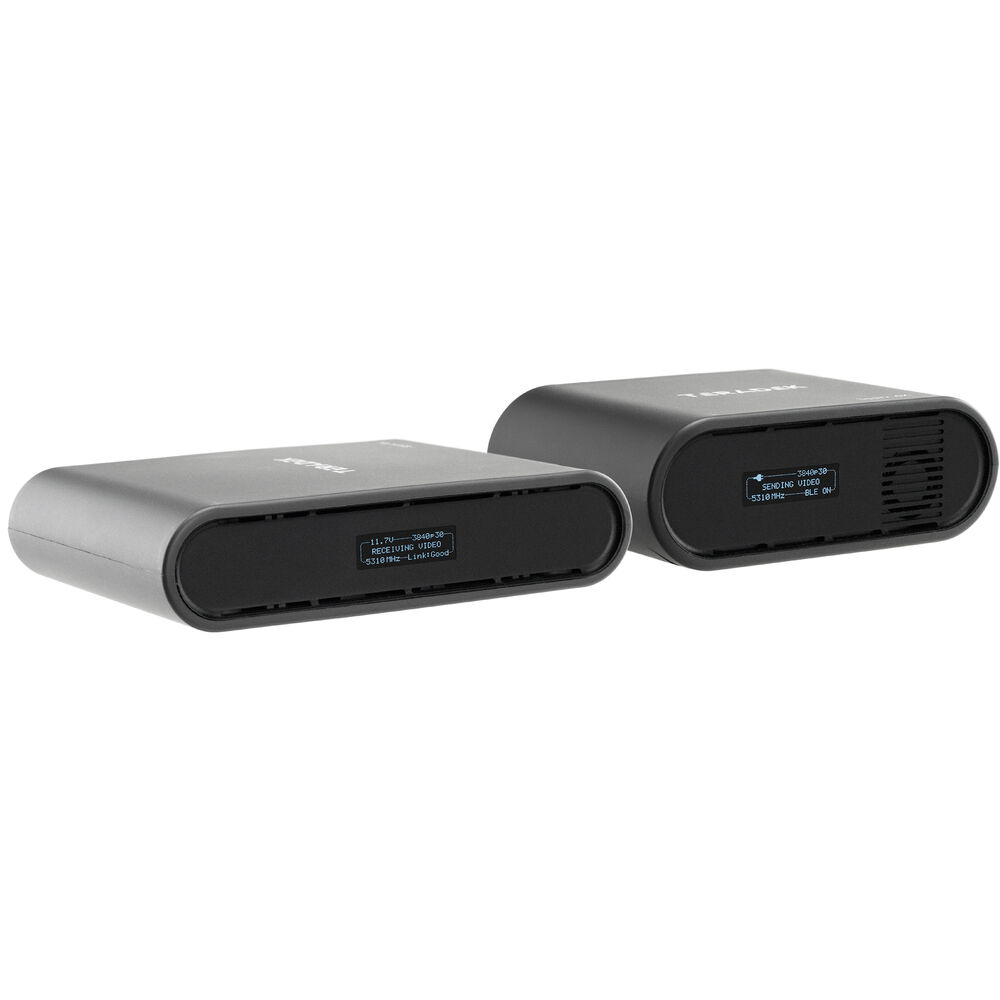
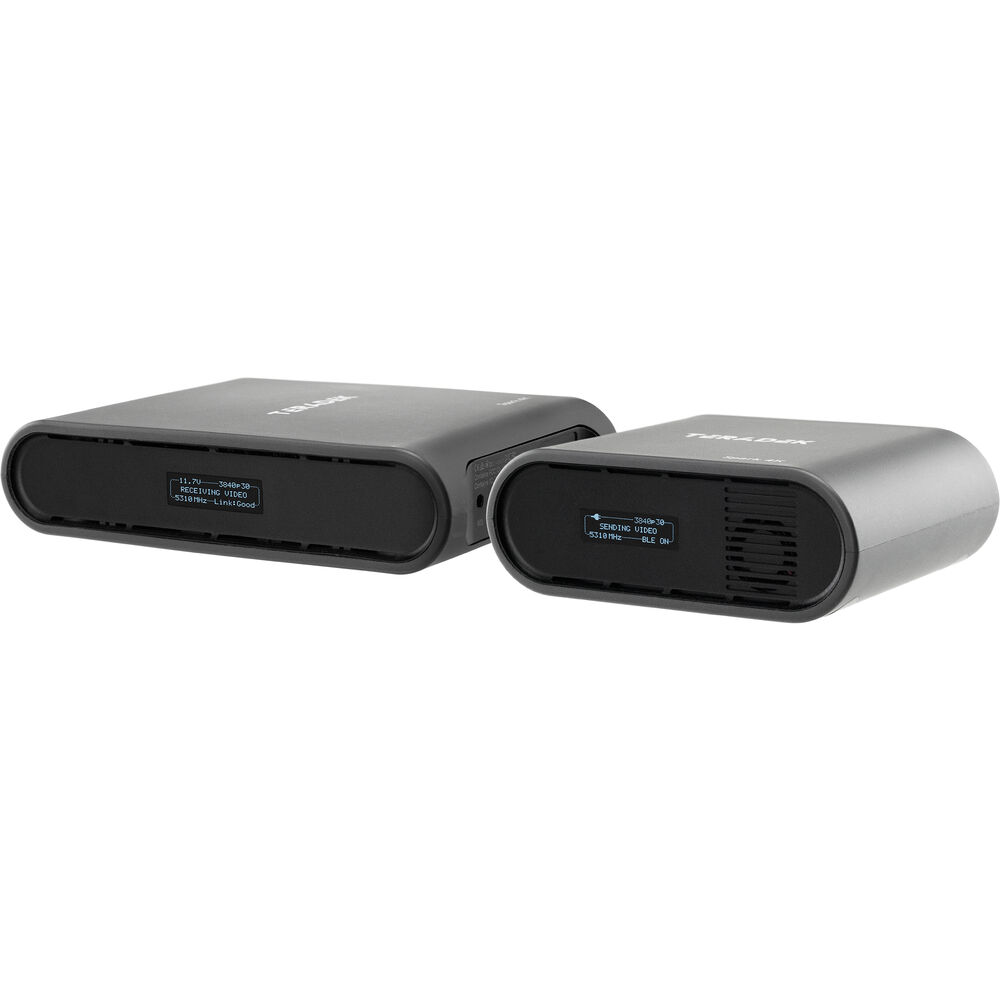
The compact and lightweight design of DJI SDR Transmission 2 includes a TX/RX switchable transceiver, with one transmitter feeding up to eight receivers, each with remote control. It integrates seamlessly with DJI Ronin stabilizers and offers professional monitoring and control features, such as camera switching, ultra-high-definition feeds to monitors, and mobile feed viewing through the DJI Ronin app. The system also supports PTP camera control and CEC control for Sony cameras, providing a comprehensive solution for professional productions.
Included in box
1x DJI SDR Transmission 2 Transceiver
1x DJI SDR Transmission 2 Camera Cold Shoe Adapter
1x DJI SDR Transmission 2 NP-F Battery Adapter
1x Firmware Update Cable (USB-C to USB-C, 50 cm)
About the DJI SDR Transmission 2
Ready for Complex Sets
DJI SDR Transmission 2 advances SDR technology with stronger interference resistance, better image quality, and greater range [1]. Even on crowded sets, it maintains a high-bitrate, low-latency feed. A TX/RX switchable transceiver design and Ronin series [2] compatibility bring pro-grade performance to a compact, lightweight form factor.
1 TX to 8 RX With Control, Multi-Group Transmission [3]
1 TX to 8 RX With Control [3]
A single transmitter feeds up to eight receivers, each with remote control. Directors and DPs get a high-resolution feed, while operators and focus pullers can adjust settings and control the camera remotely.
Multi-Group Transmission [3]
Run up to five transmitters and 40 receivers at the same time. Even in complex on-set environments, the wireless camera feed stays stable without sacrificing 4K image quality [6].
Auto Channel 2.0 [4]
Smart Coordination Enhanced Scanning
Auto Channel 2.0 [4] takes over channel management on set. With Auto Mode enabled, transceivers recognize one another and intelligently coordinate frequencies. More accurate spectrum scanning and conflict diagnostics allow each unit to hop frequencies seamlessly [5] as conditions change, maintaining a stable connection despite interference, even with multiple systems running side by side.
SDR, Evolved
DCI 4K Monitoring [6]
SDR Transmission 2 transmits DCI 4K/60fps, 10-bit HDR [6], and H.265 video at bitrates up to 50 Mbps [7]. The result is rich detail, smooth colour transitions, and clear highlights and shadows, with consistent image quality across multiple cameras.
Up to 4 km Range [8]
Video transmission reaches up to 4 km [8]. From open stadiums to dense mountain forests, and through demanding car-to-car shots or FPV drone work, it sustains a reliable link where you need it most.
Latency as Low as 35 ms [9]
Even with higher image quality, latency stays as low as 35 ms [9]. That keeps monitoring and remote commands, like focus pulls and gimbal moves, responsive.
Flexible by Design
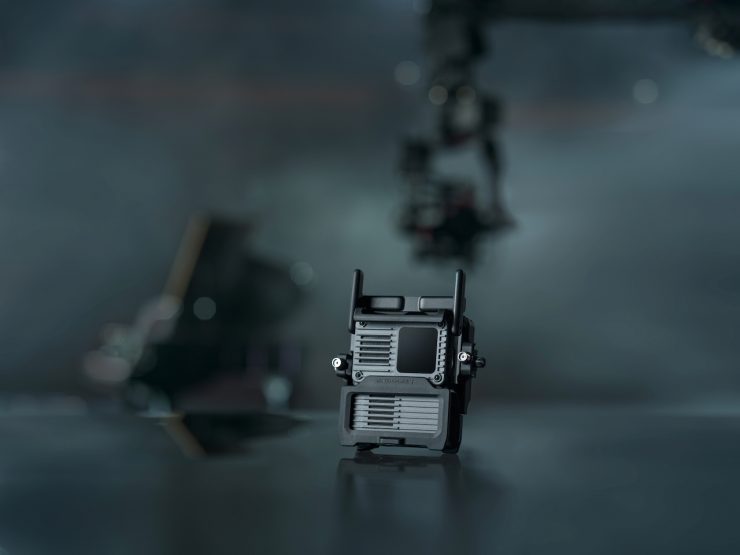
Compact Body, Serious Capability
TX/RX Switchable
Switch between transmitter and receiver on the fly. There is no need to decide your TX-to-RX ratio in advance, so every unit adapts to whatever the shoot calls for.
Approx. 136g Unit
The unit provides one HDMI and two USB-C ports. Its lightweight body reduces the load on handheld gimbals and mounts easily across a wide range of camera setups.
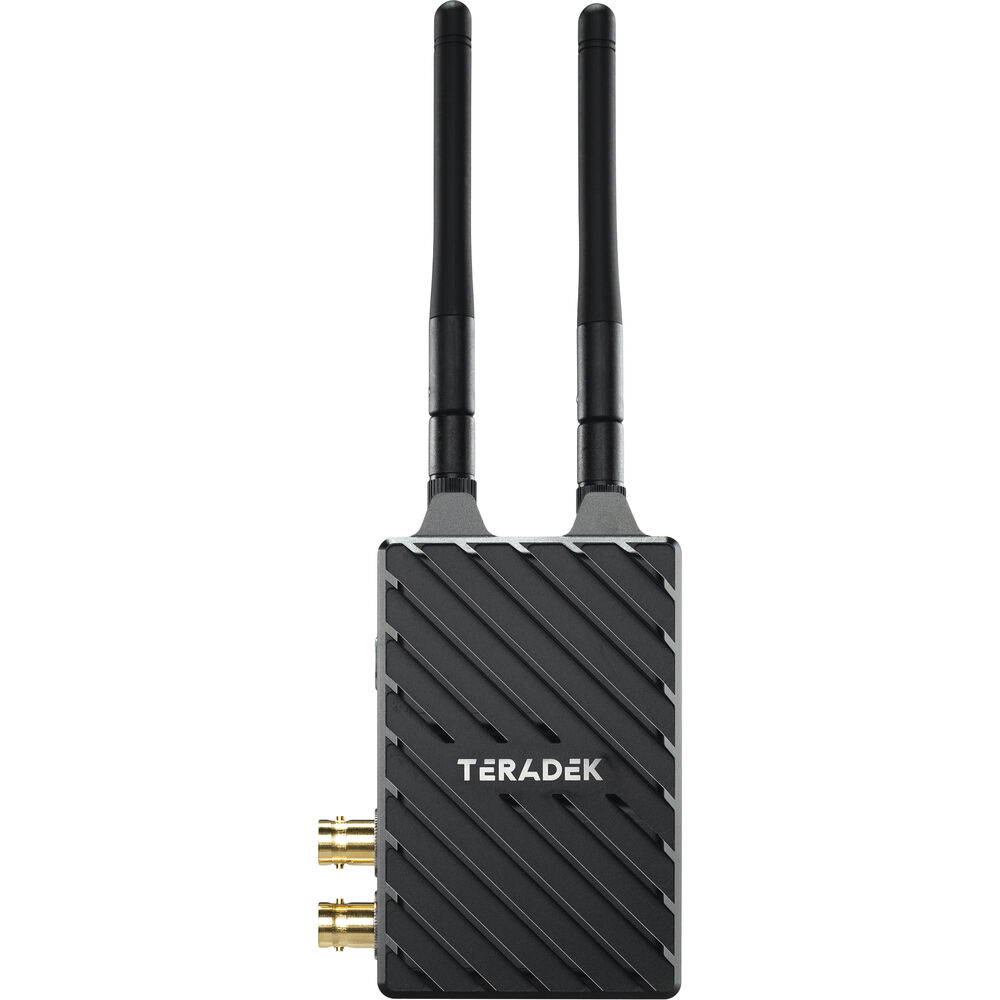
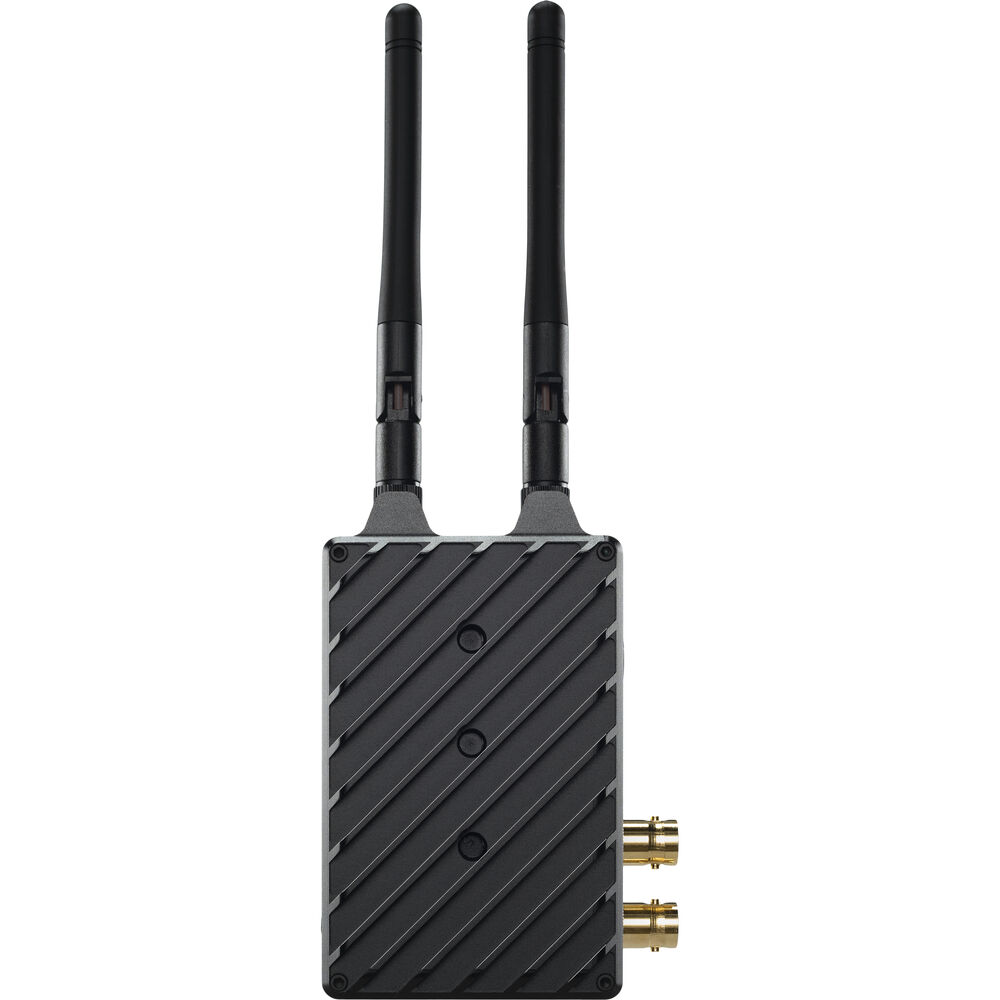
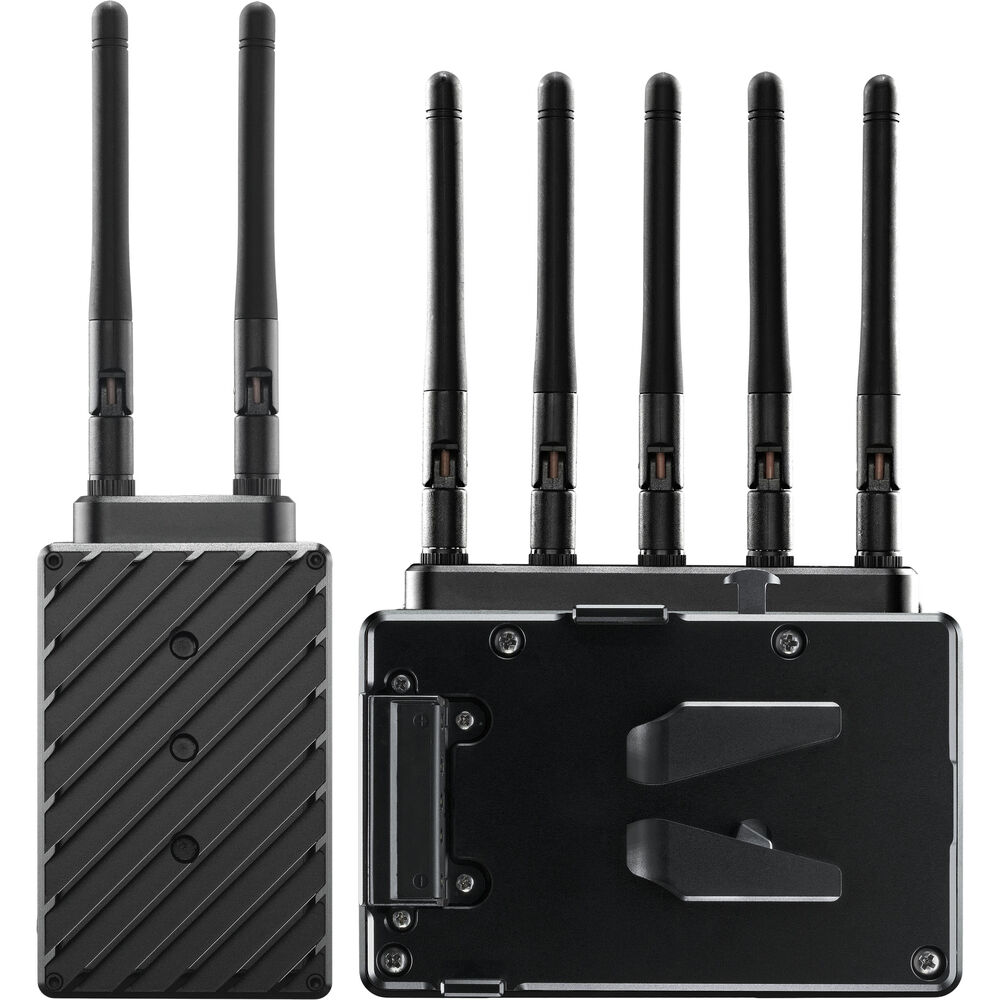
Expansion Plate [10]
Provides one SDI, one HDMI, and four USB-C ports. It also supports metadata transmission via SDI from mainstream cinema cameras like ARRI and RED.
Transceiver Cage [10]
For car mounts and other outdoor setups, the cage adds rugged protection with plenty of mounting points. It locks the unit firmly onto a wide range of gimbals and rigs.
Ronin Ecosystem [2] and Beyond
Compact Systems
Integrates seamlessly with DJI RS series stabilizers [2]. With the DJI Ronin app, a single phone handles both monitoring and control, from operating the gimbal wirelessly to starting and stopping recording.
Pro Productions
Supports DJI Ronin 2 and Master Wheels [2]. Even with large cinema cameras on complex car mounts or crane rigs, operators can stay at the monitor and precisely control each move through the wheels.
Action Angles
Connect an Osmo Action or Pocket series device over USB-C [11] for sports, reality shows, and hard-to-reach angles. It offers a lightweight way to add a remote monitoring feed from perspectives that larger rigs cannot cover.
Professional Monitoring and Control
Camera Switching
No more rebooting, scanning, and re-pairing. Switch between camera feeds from the transceiver or the DJI Ronin app, saving valuable time on set.
Monitor Feed
Delivers an ultra-high-definition, low-latency feed to professional monitors over SDI [12], HDMI, or DP, so multiple monitors can share the same clean image.
Mobile Feed [13]
For monitoring on the move, connect a phone or tablet to the receiver over USB-C and view the feed in the DJI Ronin app. A wired link keeps it stable and high-bitrate.
DJI Ronin App [13] Monitoring Assistance Tools
The app supports professional monitoring tools such as LUT, histogram, waveform, and false colour, delivering a more efficient and precise monitoring experience.
PTP/CEC Camera Control
DJI SDR Transmission 2 supports PTP camera control [14], allowing users to view and adjust aperture, shutter speed, and ISO settings, while also enabling photo capture and video recording through the app. Additionally, it supports CEC control for Sony cameras, activating Mirror Control mode.
Control for the RS Series Stabilizers [2]
The transceiver can wirelessly control RS Series stabilizers via the DJI Ronin app, supporting Force Mobile, virtual joystick, and gimbal recentering features.
Power Supply Solutions
NP-F Power Supply
The transceiver supports industry-standard NP-F battery types with a voltage range of 6.8 to 8.4 V.
USB-C Power Supply
SDR Transmission 2 can be powered by a standard PD protocol charger [15] via USB-C, with a power input rated at 15 V/9 V [16] and 3 A.
Gimbal Power
Thanks to the integrated power supply design, the transceiver can be mounted on and powered directly by DJI RS 5, RS 4 Pro, RS 4, RS 3 Pro, Ronin 2, or Master Wheels [2], eliminating the need for a separate battery.
Notes
Compared to DJI SDR Transmission, this product features the upgraded Auto Channel 2.0, delivering better transmission performance when multiple groups of transmitters and receivers operate simultaneously. It supports video quality up to DCI 4K/60fps with a maximum encoding bitrate of 50 Mbps, and a transmission range of up to 4 km.
Supported models include DJI RS 5, RS 4 Pro, RS 4, RS 3 Pro, Ronin 2, and Master Wheels. Please note: When using with Ronin 2 or Master Wheels, the DJI SDR Transmission 2 Gimbal Control Cable (USB-C to 4-pin) is required (sold separately). When using with RS 4, RS 4 Pro, or RS 3 Pro, the DJI SDR Transmission 2 Gimbal Control Cable (USB-C to CAN) is required (sold separately). Please also note: When connecting the DJI SDR Transmission 2 Transceiver to an RS series stabilizer, remote camera control requires an additional Multi-Camera Control Cable to connect the gimbal and camera. You can use the Multi-Camera Control Cable included with the stabilizer, or purchase a compatible cable from the official DJI Store based on your camera model. For supported camera models and available control functions, refer to the “Camera & Lens Compatibility” page on the corresponding stabilizer’s official website. Additionally, when the DJI SDR Transmission 2 Transceiver is connected to a stabilizer via the Quick-Release Plate, a native vertical shooting setup is not supported.
For the optimal transmission experience, it is recommended to operate no more than five transmitters simultaneously in the same area. DJI SDR Transmission 2 cannot be cross-connected with other DJI video transmission products.
Auto Channel 2.0 activates when Channel Mode is set to Auto.
The 5.8 GHz and DFS frequency bands are prohibited in certain countries/regions. Check local laws and regulations for more information. 5.600-5.650 GHz is not used.
DCI 4K/60fps HDR requires connection via the HDMI or DP port (bottom USB-C port) on the transceiver main unit.
The maximum encoding bitrate is 50 Mbps, measured under controlled conditions. Actual encoding and transmission bitrates may vary depending on the environment and transmission distance.
Measured under CE compliance using one TX and one RX in open, unobstructed, and interference-free controlled conditions.
Camera and screen display latency are not included. Measured when shooting 1080p/60fps and 4K/60fps video.
10. Sold separately.
11. Supports Osmo Action 6 and Osmo Pocket series (Osmo Pocket 4 and later) via USB-C for monitoring and power supply.
12. The SDI port is available on the DJI SDR Transmission 2 Expansion Plate, which is sold separately.
13. Connect the transceiver (RX) to a smartphone or tablet via a USB-C to USB-C or USB-C to Lightning cable. Cable is not included.
14. For details, please refer to the Camera Compatibility List at the top of this page.
15. A PD power adapter with an output of 65 W or above is required.
16. The input voltage is 9 V when powered via the three bottom USB-C ports on the DJI SDR Transmission 2 Expansion Plate (SDI/HDMI/USB-C). It is 15 V when powered via the transceiver’s two USB-C ports or the right-side USB-C port on the Expansion Plate.